
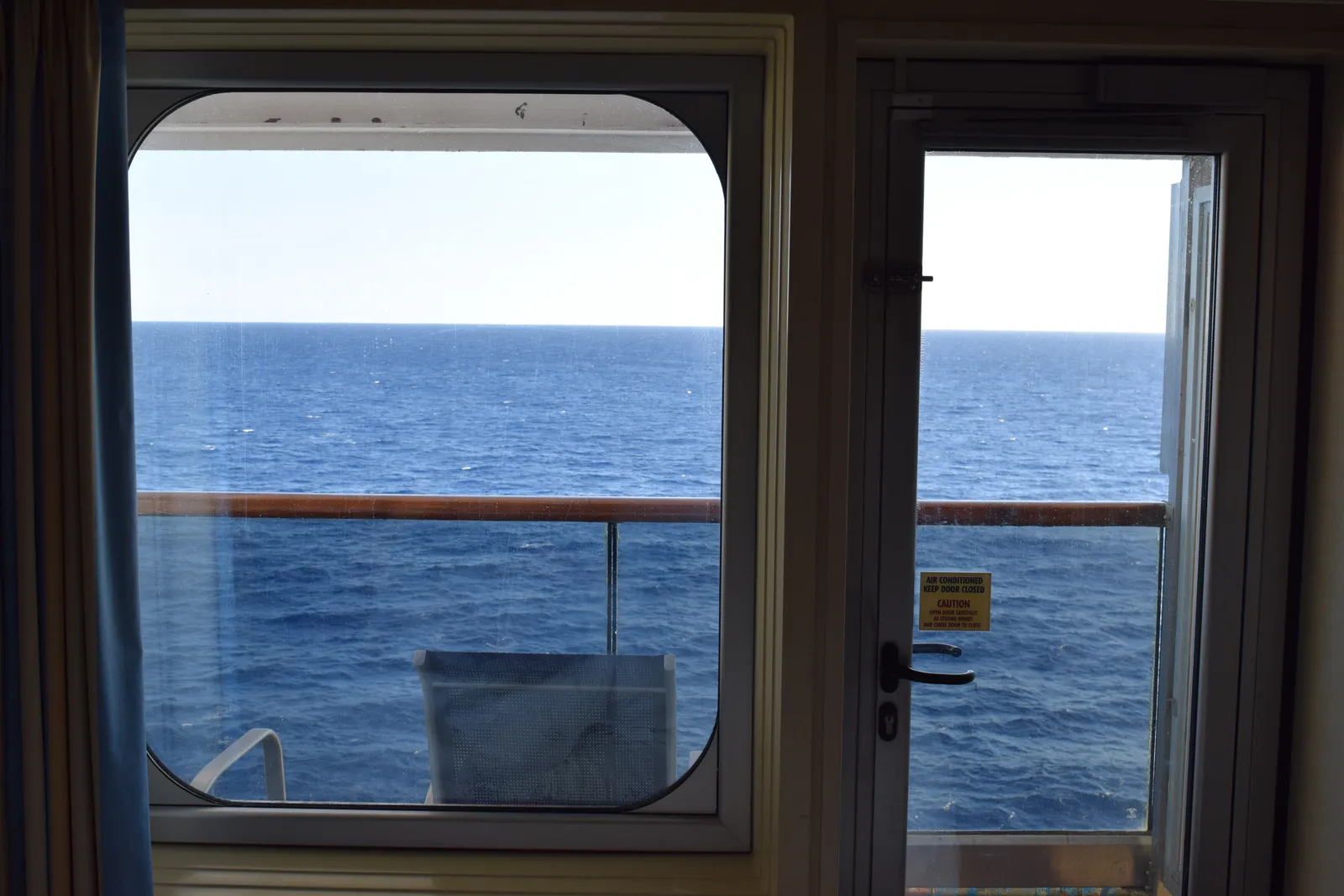
Most cruise cabins are quiet. The ones that aren't usually have a neighbor you can spot on the deck plan before you sail: a pool deck overhead, a nightclub below, or a busy elevator lobby next door. If you know where to look, you can tell in a few minutes whether your cabin is one of them.
In 14 cruises I've managed to avoid a noisy cabin, and one habit helps more than any other: I only book on decks that have cabins both above and below.
Where cabin noise comes from
Noise on a ship mostly travels through the floor and ceiling, so the deck directly above and directly below your cabin matters most. Here's what to look for, roughly from most to least disruptive:
- Late-night venues above or below: nightclubs, bars with live music, theaters and teen clubs. These are the ones that can keep you awake.
- The pool deck or buffet above: busy and lively in the daytime, and staff often set up loungers and tables early in the morning. Fine for most people; noticeable for light sleepers and late risers.
- Elevators and stairs beside you: more people walking past your door, and some doors and chimes. Some travelers like being close; others notice the foot traffic.
- Crew and service areas: doors marked as crew-only on the plan can mean carts, deliveries and early starts.
- The very front or back of the ship: not noise exactly, but the most motion forward and some engine vibration aft.
None of these is a disaster. A cabin under the pool deck can be a perfect pick for an early riser who's out all day. The point is to know before you go.
How to check your cabin on the deck plan
- Find your cabin on your cruise line's official deck plan for your ship. Make sure it's your ship, not a sister ship, because layouts differ.
- Look at the deck above. Find the spot directly over your cabin's position along the ship. Is it more cabins, or a venue?
- Look at the deck below the same way.
- Look along your own deck: elevators, stairs, doors to crew areas, and how close you are to the front or back.
- Check the plan's symbols for obstructed views (lifeboats, for example) and connecting doors, which can let sound through from the next cabin.
The tricky part is step 2: decks are often drawn at different scales, so "directly above" isn't always obvious. That's why we read every cabin deck of each ship's official plan ourselves and line the decks up.
Check yours in a minute: pick your ship and type your cabin number on our cabin map. It shows what's above, below and beside it, a plain verdict, and how sure we are.
If your cabin has a catch
- It may not matter to you. Daytime pool noise rarely bothers someone who's ashore or at the pool all day.
- Pack for it: earplugs or a small white-noise machine handle most cabin noise.
- Ask about moving. If it's early enough, a cruise line or travel advisor can sometimes move you to a better cabin in the same category, depending on what's open.
Personally, I pack a small fan (one the cruise line allows) and a white-noise machine, which cover most stray noise.
If you've already booked, we can look at better spots on your ship for you, free: see Already booked?.